Many thanks to Aylesbury AS for using Astrospeakers.org. It was a good evening.
Category: Uncategorized
Lecture to Chichester AS (South Downs) lots of questions.
The lecture on technical challenges of measurement in astronomy went well and loads of interesting questions. All started from the slow (15years) of looking for exoplanets round V470 Cam. Easily visible reduction in the errors over the time I have been making measurements. Some of the error reduction techniques I have used.
New Lecture on ‘Time’ went well.
Delivered to a great audience at the Farnborough Site (Cody AS). Mix of history, science, technical information and current research. Need to put it on Astrospeakers.org
New paper accepted by Royal Astronomical Society.
Now loaded on arXiv.org Cornell University Archive.
- arXiv:2206.06919 [pdf, ps, other] astro-ph.SR astro-ph.EPEclipse timing variations in post-common envelope binaries: Are they a reliable indicator of circumbinary companions?
- Authors: D. Pulley, I. D. Sharp, J. Mallett, S. von Harrach
- Abstract: Post-common envelope binary systems evolve when matter is transferred from the primary star at a rate that cannot be accommodated by its secondary companion. A common envelope forms which is subsequently ejected resulting in a system with a binary period frequently between 2 and 3 hours. Where circumbinary companions are predicted, it remains unclear whether they form before or after the common en…
- ▽ MoreSubmitted 14 June, 2022; originally announced June 2022.Comments: 16 pages, 8 figures, 7 binary systems and 163 observations
M51 very short exposure clear night
This is one of my favourite galaxies. Just did a quick exposure after doing some adjustments on my telescope.

Binary System HS0705+6700 Plot
Nice plot of the light curve for HS0705+6700, 2.3hr, post-common envelope eclipsing binary system. Spectroscopy and light curve analysis indicated that the secondary companion was a low mass red dwarf star with mass and radius of 0.13M0 and 0.19R0

Paper on objects round eclipsing binary stars.
The paper is now on the archive of scientific papers:
https://arxiv.org/abs/1911.00125
Quite a significant amount of new data from our group. Some interesting departures from early expectations. It will clearly take some ongoing research to identify the mechanisms that are producing some of the effects.
Seems to be getting some interest!
Veil Nebula in Cygnus
The Veil Nebula is a cloud of heated and ionized gas and dust in the constellation Cygnus.
A supernova remnant, many portions of which have acquired their own individual names and catalogue identifiers. The source supernova was a star 20 times more massive than the Sun, which exploded around 8,000 years ago. The distance to the nebula is not precisely known, but data supports a distance of about 1,470 light-years.
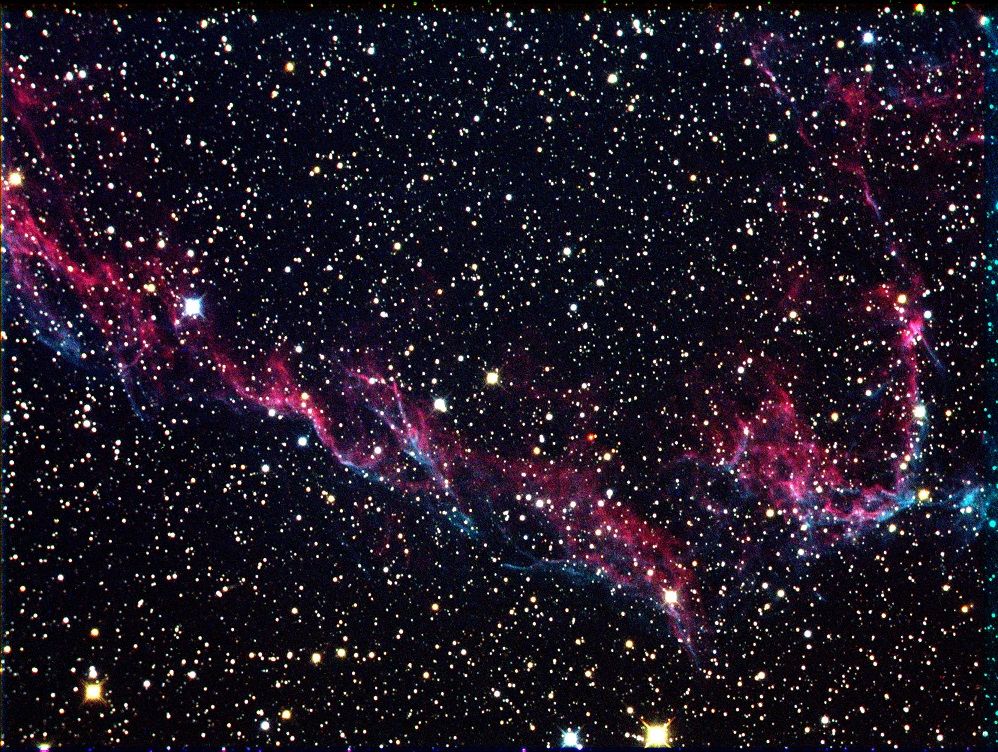
Just taken with R,G,B Filters a stack of 3 x 400sec images for each filter. Darks and Flats from the current library. Taken from Selsey with the RC Astrograph and Starlight Xpress H694 camera at -12c.
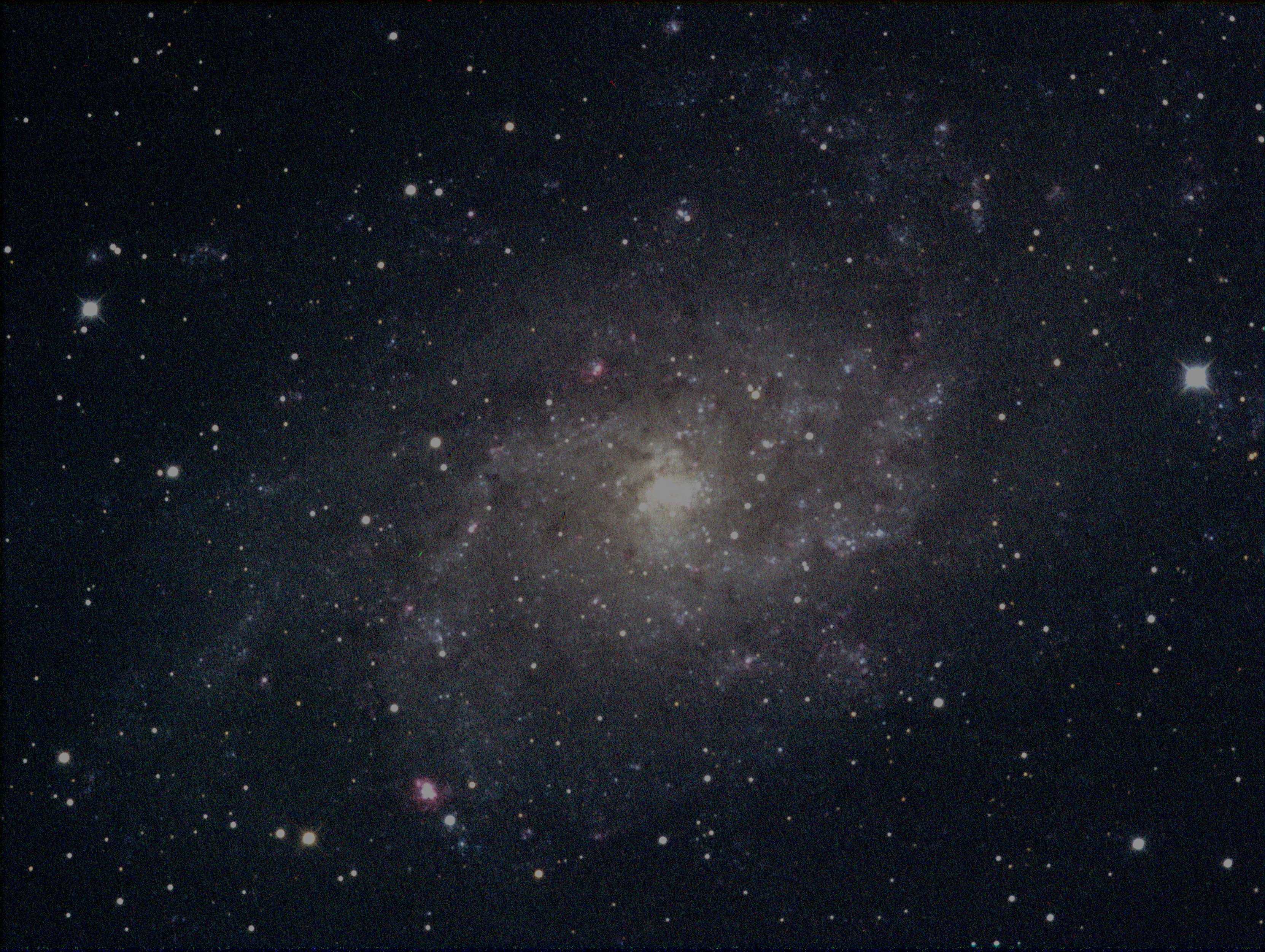
M33 next to 30% moon.
Managed to get M33 as it was a clear but very bright night.
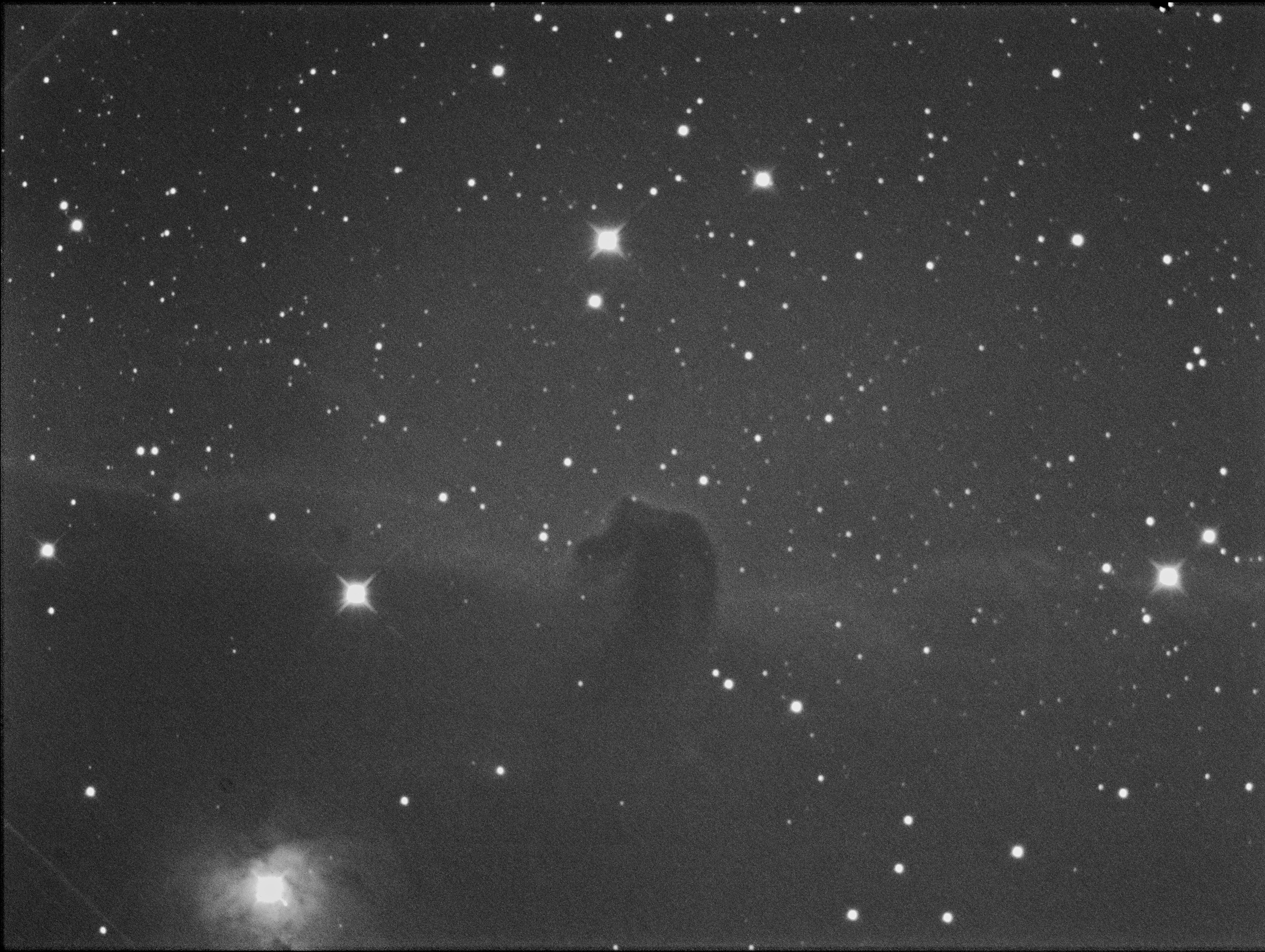
Monochrome Horsehead in Orion – Round Stars (Yes!!!)
Finally fixed the problem of round stars on long exposures. 6 X 600sec 8inch RC Astrograph and SXVR-H18 at -20degC